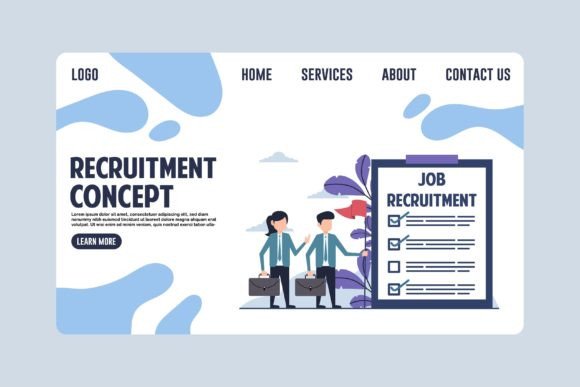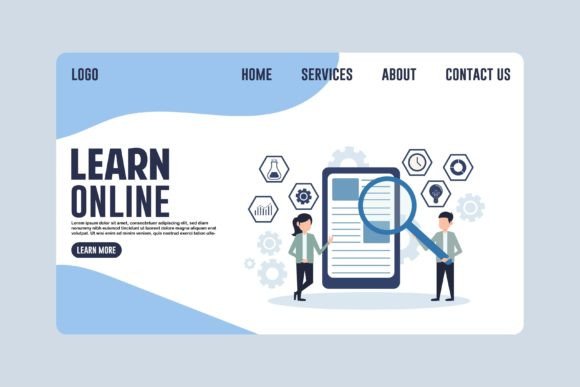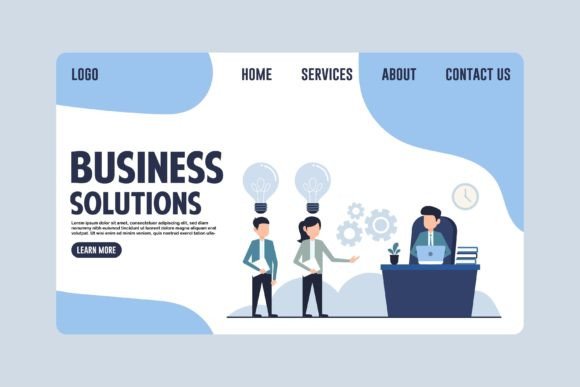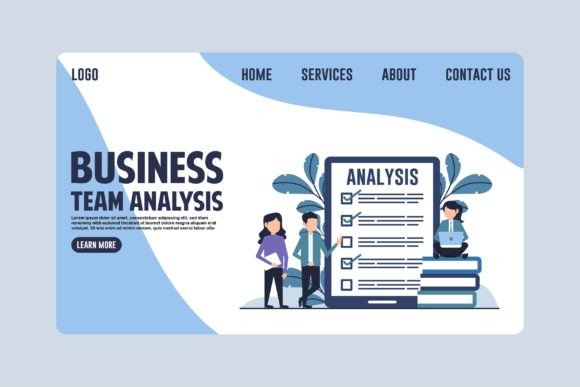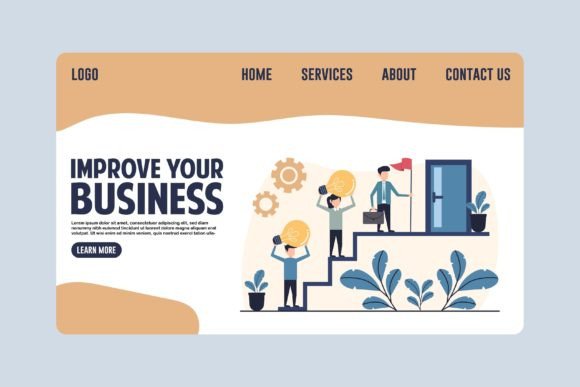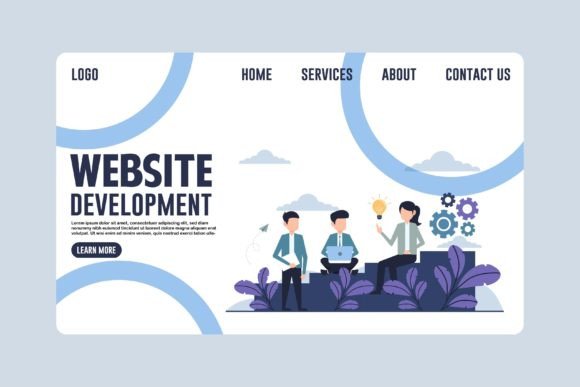
Understanding the Landing Page Website Development Concept for Scalable Design
In the modern digital landscape, the efficiency of a landing page often determines the success of a marketing campaign. The Landing Page Website Development Concept represents a strategic approach to creating high-conversion entry points that are not only visually compelling but also technically robust. Unlike traditional raster-based design workflows, this concept prioritizes vector graphics as the foundational element of the user interface. This distinction is critical for designers and developers who require assets that can be manipulated without degradation in quality. By focusing on scalable vector graphics, teams can ensure that every hero image, banner, and infographic remains crisp across devices ranging from large desktop monitors to compact mobile screens.
The Core Distinction: Vector-Based Architecture vs. Raster Limitations
The primary differentiator of the Landing Page Website Development Concept lies in its reliance on 100% vector elements. In standard web design, images are frequently created using raster formats like JPEG or PNG. While these formats are excellent for photography, they suffer from pixelation when scaled up or down. If a designer creates a banner at 1920 pixels wide and later needs it for a 4K display or a small mobile icon, the image may lose clarity, resulting in a blurry or jagged appearance. This limitation forces designers to create multiple versions of the same asset for different screen sizes, increasing file management complexity and production time.
Conversely, the vector-centric approach ensures that all graphical components are mathematically defined rather than pixel-defined. This means that any element within the design template—whether it is a complex illustration, a geometric shape, or a custom icon—can be transformed, scaled up or down, and recolored without losing quality. When utilizing a resource that provides 100 vector source files in EPS formats, the design workflow becomes significantly more flexible. A single file can serve as the master asset for a hero image, a social media banner, an infographic, or a print advertisement. This scalability is not merely a convenience; it is a fundamental requirement for responsive web design where layout fluidity is paramount.
Comparing Workflow Efficiency: Static Templates vs. Editable Vectors
When evaluating design resources, professionals must consider the tradeoffs between static templates and fully editable vector packages. Many pre-made landing page designs offer high-resolution JPG files that look polished but are locked in their current state. Modifying these assets often requires advanced photo editing skills or results in a compromised aesthetic if the user attempts to alter colors or remove specific elements. The rigidity of static files can slow down the development process, especially when client feedback necessitates rapid iterations.
The Landing Page Website Development Concept addresses this friction by providing complete access to the underlying vector data. With tools compatible with vector graphics software, users can easily add or remove elements, adjust typography, and recolor entire sections instantly. This capability transforms the design phase from a rigid implementation into a dynamic customization process. For instance, if a marketing team decides to change the brand color scheme midway through a project, a vector-based template allows for a global color update in seconds, whereas a raster-based approach would require redrawing or heavily editing individual images. This flexibility reduces the time-to-market for new campaigns and lowers the overall cost of design maintenance.
Evaluating Use Cases: Where Vector Concepts Excel
While the benefits of vector graphics are clear, understanding the specific scenarios where the Landing Page Website Development Concept is most effective helps in making informed decisions. This approach is particularly advantageous for projects requiring diverse output formats. Consider a comprehensive product launch that requires a website landing page, a series of email banners, mobile app splash screens, and printed brochures. Using a unified vector source file ensures visual consistency across all these mediums. The ability to scale assets infinitely means that the same design language translates perfectly from a small mobile notification to a large billboard, maintaining brand integrity throughout the customer journey.
Furthermore, this concept is ideal for industries that rely heavily on infographics and data visualization. Financial services, tech startups, and educational platforms often need to present complex information clearly. Vector illustrations allow for clean lines and sharp text that remain readable regardless of zoom level. When designing infographics for a landing page, the ability to manipulate individual data points or charts within the vector file allows for precise storytelling. This level of control is difficult to achieve with fixed-image templates, where altering a chart might require recreating the entire graphic from scratch.
Mobile Web and Responsive Design Considerations
With mobile traffic accounting for a significant portion of global web usage, the performance and appearance of landing pages on smartphones are non-negotiable. The Landing Page Website Development Concept supports responsive design principles by providing lightweight, scalable assets. Vector files can be optimized for web delivery, ensuring fast load times while retaining sharpness on high-density "Retina" displays. In contrast, high-resolution raster images can bloat page size, leading to slower load speeds and higher bounce rates. By leveraging vector sources, developers can implement adaptive layouts that adjust seamlessly to various screen dimensions without the need for multiple image resolutions.
Decision Factors: Strengths, Tradeoffs, and Limitations
Despite its advantages, the vector-based approach is not a one-size-fits-all solution. Prospective users should weigh the strengths against potential limitations before committing to this design strategy. One of the primary strengths is longevity. Vector files do not become obsolete due to changes in screen resolution standards. A design created today will look just as sharp on future displays as it does now. Additionally, the inclusion of high-resolution JPG previews alongside the EPS source files offers a practical balance, allowing stakeholders to review the final look quickly while retaining the ability to edit the source.
However, there are tradeoffs to consider. Vector graphics excel at shapes, icons, and flat or semi-flat illustrations but may not be suitable for photorealistic imagery. If a landing page requires complex textures, realistic lighting effects, or detailed photography, a purely vector approach might lack the necessary depth. In such cases, a hybrid approach is often best, combining vector elements for UI components and typography with raster images for background photography. Furthermore, working with vector files requires familiarity with vector graphics software. Teams accustomed solely to drag-and-drop website builders or basic image editors may face a learning curve when manipulating EPS files. Access to professional software is a prerequisite for fully utilizing the 100 vector source files included in such packages.
When to Choose Alternative Approaches
There are situations where the Landing Page Website Development Concept might not be the optimal choice. For simple, one-off promotional pages where speed is the only metric and no customization is anticipated, a static template might suffice. If the design requirements are strictly photographic and do not involve illustrative elements, investing time in vector manipulation may yield diminishing returns. Additionally, if the target audience primarily accesses content via low-bandwidth connections where even optimized vector rendering could be a concern (though rare with modern compression), simpler raster assets might be preferred.
Ultimately, the decision hinges on the long-term goals of the project. For businesses planning multiple campaigns, frequent rebranding, or cross-platform consistency, the investment in a vector-based development concept pays dividends in flexibility and quality. It empowers designers to iterate rapidly and maintain high standards across all touchpoints. For those seeking a static, "set-it-and-forget-it" solution with minimal maintenance, other options may align better with their immediate needs.
Practical Implementation and Asset Management
Implementing the Landing Page Website Development Concept effectively requires a structured approach to asset management. Receiving a package containing 100 vector source files can initially seem overwhelming. To maximize value, it is advisable to organize these files logically, perhaps categorizing them by component type such as headers, footers, icons, and illustrations. This organization facilitates quicker retrieval during the design process. Furthermore, establishing a style guide based on the vector elements ensures that all team members use colors, fonts, and shapes consistently.
Collaboration is another key factor. Since vector files are editable, they facilitate smoother handoffs between designers and developers. Instead of sending flattened images, designers can share the source files, allowing developers to inspect layers and extract specific elements if needed for code integration. This transparency reduces miscommunication and ensures that the final product matches the design intent. The inclusion of high-resolution JPGs serves as a reference point for stakeholders who may not have access to vector software, bridging the gap between technical execution and visual approval.
In conclusion, the Landing Page Website Development Concept offers a powerful framework for creating adaptable, high-quality digital experiences. By prioritizing vector graphics, it solves common issues related to scaling, resolution, and customization. While it requires specific tools and skills, the benefits of infinite scalability and design flexibility make it a superior choice for many professional applications. Whether for web graphics, mobile interfaces, or infographics, this approach equips teams with the resources needed to meet evolving design demands without compromising on visual fidelity. As organizations continue to seek efficient ways to engage users across diverse platforms, the shift toward vector-centric development concepts remains a prudent and forward-thinking strategy.