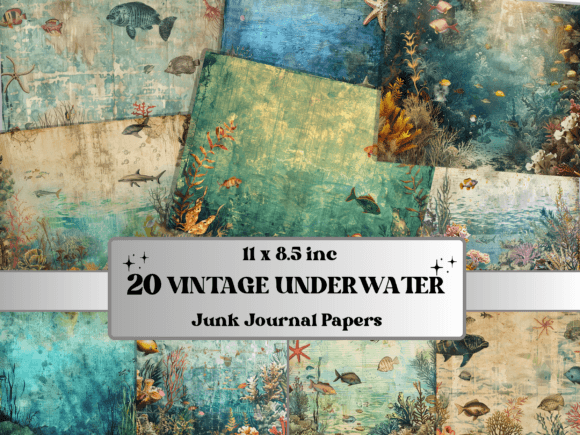
Vintage Underwater Background Paper: A Practical Guide for Crafters
The intersection of marine aesthetics and vintage design has created a distinct niche within the digital crafting community. Vintage Underwater Background Paper represents a specific category of digital assets designed to evoke the mystery and nostalgia of the ocean through aged textures, sepia tones, and classic illustration styles. For individuals engaged in scrapbooking, journaling, or mixed media art, selecting the right background is often the foundational step in the creative process. This guide evaluates the utility, application, and considerations surrounding these digital files to help you determine if they align with your specific project requirements.
Defining the Digital Asset
Vintage Underwater Background Paper typically refers to high-resolution image files intended for physical printing or digital composition. Unlike modern, photorealistic underwater imagery, this style leans heavily on historical artistic interpretations. Common visual elements include coral reefs rendered in watercolor or ink, sea life such as whales and jellyfish depicted in etching styles, and textured overlays that mimic old parchment or weathered paper.
These files are generally distributed in standard formats like JPG or PNG. A typical collection, such as one containing 20 unique designs, offers a variety of patterns ranging from subtle textures to busy collages. The technical specifications are crucial for usability; files are usually provided at 300 DPI (dots per inch) to ensure sharpness when printed. Standard dimensions often align with Letter Size (8.5 x 11 inches), though horizontal orientations are common for specific layout needs. Understanding these parameters is essential before integrating them into your workflow.
Why Choose Vintage Ocean Themes?
Crafters often gravitate toward Enchanted Underwater Background Junk Journal Paper for several practical and aesthetic reasons. The primary driver is thematic cohesion. If a project focuses on nautical adventures, coastal living, or ocean conservation, using a background that matches the era or mood of the content creates a unified narrative.
Furthermore, the "vintage" aspect offers a textural depth that is difficult to achieve with plain colored paper. The distressed look of old maps or faded photographs allows new photos and handwritten notes to blend seamlessly, reducing the stark contrast often found in modern digital layouts. This style is particularly effective for:
- Narrative Storytelling: Creating travel journals or memory books that feel timeless rather than dated by current trends.
- Atmospheric Setting: Establishing a moody, romantic, or mysterious tone for invitations and greeting cards.
- Educational Projects: Designing worksheets or classroom materials about marine biology that appeal to students through classic illustration styles.
Benefits and Technical Considerations
The transition from physical paper sourcing to digital downloads offers distinct advantages. The most significant benefit is cost-effectiveness. Purchasing a single pack of 20 digital files is generally more economical than buying equivalent high-quality physical papers, especially when considering shipping costs. Additionally, digital files offer infinite reproducibility; if a print fails or a page is damaged, the file can be reprinted without additional expense.
Resolution is a critical factor in quality control. Files specified at 300 DPI are the industry standard for professional printing. Lower resolutions may appear pixelated or blurry when enlarged to full Letter Size (210 x 297 mm). When evaluating a set, verify that the dimensions match your printer's capabilities. For instance, an 11x8.5 inch horizontal format is ideal for landscape-oriented planners or wide-format scrapbook pages, but it may require cropping for portrait-oriented albums.
Another consideration is color accuracy. Digital screens often display colors differently than inkjet or laser printers reproduce them. Vintage palettes rely heavily on muted blues, teals, browns, and creams. It is advisable to print a test sheet on the specific paper stock you intend to use to ensure the hues match your vision.
Ideal Use Cases
Vintage Underwater Background Paper excels in specific crafting scenarios where texture and theme are paramount. These digital assets are a strong fit for:
- Junk Journals: These projects thrive on layering and ephemera. The intricate details of sea life collage scrapbook paper provide excellent backdrops for ticket stubs, dried flowers, and handwritten poetry.
- Card Making: The horizontal orientation of many digital files makes them perfect for creating custom card bases. The vintage aesthetic pairs well with calligraphy and die-cut embellishments.
- Planner Stickers and Inserts: Cutting down large digital prints into smaller sections allows for the creation of functional planner stickers or decorative page dividers.
- Decoupage and Home Décor: Printed on heavy cardstock, these images can be used to decorate wooden boxes, frames, or furniture pieces, adding a touch of maritime elegance to home interiors.
When to Consider Alternatives
While versatile, vintage underwater themes are not universally applicable. There are situations where alternative options may serve your project better.
If your goal is a clean, minimalist aesthetic, the busy patterns often found in Ocean Ephemera Kits might overwhelm the content. In cases where legibility is the priority—such as educational handouts or business documents—a solid color or a very faint watermark is preferable to a detailed collage. Additionally, if you require vibrant, neon, or hyper-realistic colors, the muted, sepia-toned palette of vintage papers will not meet those expectations.
Furthermore, consider the medium. While these files are printable, some crafters prefer tactile, pre-textured papers. If your project involves heavy embossing or requires specific paper weights that cannot be easily sourced locally, purchasing physical specialty paper might yield a superior result compared to printing on standard copy paper.
Decision-Making Insights
Before committing to a specific download, evaluate your workflow. Do you have access to a printer capable of handling 300 DPI output? If you rely on a local print shop, ensure they accept personal digital files and understand the paper stock requirements for best results. Check the licensing terms of the digital files; while many are suitable for personal use, commercial rights for selling finished products often require a separate license.
Finally, assess the variety within the collection. A set of 20 files should offer enough diversity to prevent visual monotony. Look for a mix of dense illustrations and open spaces. Having both allows you to choose backgrounds that either frame your photos or act as subtle textures behind text-heavy pages.
Conclusion
Vintage Underwater Background Paper offers a rich resource for creatives looking to infuse their projects with a sense of history and wonder. By understanding the technical specifications, aesthetic limitations, and ideal applications, you can make an informed decision about whether these digital assets fit your needs. Whether you are constructing a junk journal, designing invitations, or exploring mixed media art, these printable horizontal digital pages provide a flexible foundation for bringing your artistic vision to life. As with any creative tool, the value lies in how effectively it supports your specific goals and enhances the final outcome of your work.